Portable energy
How to choose a power station for a camper
Maximum power attracts attention, but useful capacity, charging time, noise and the range of outputs also shape everyday convenience.
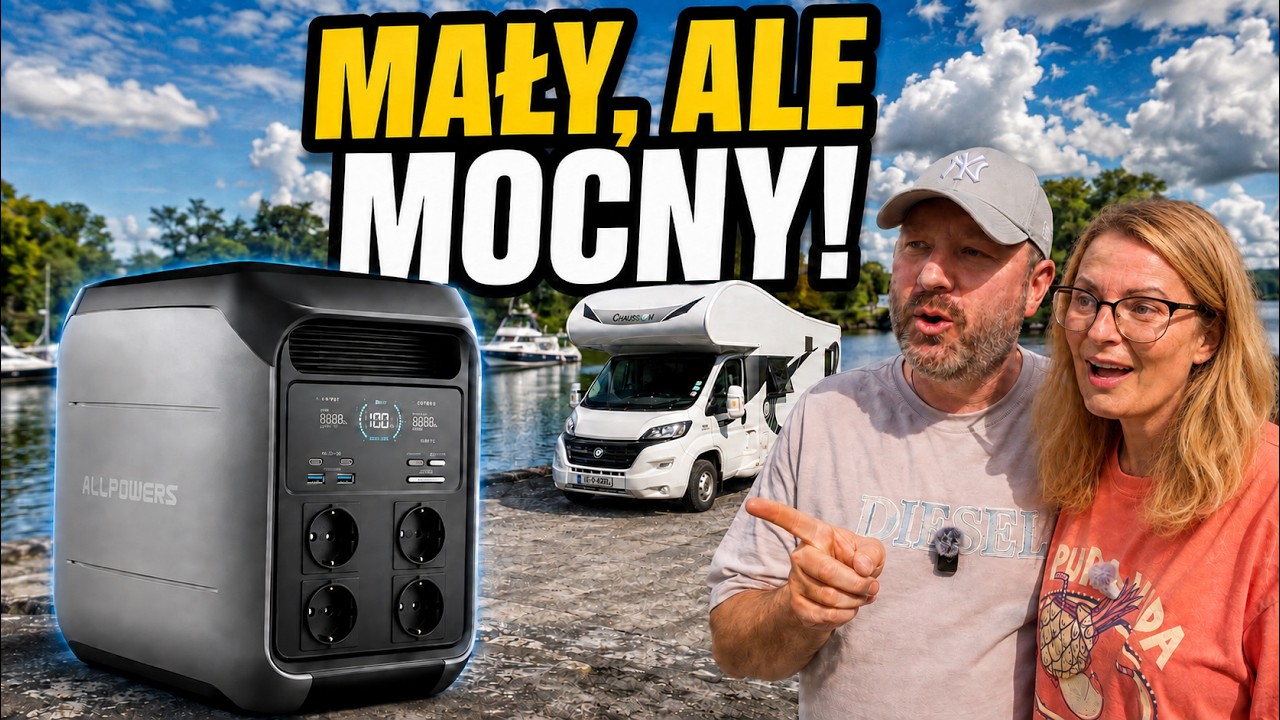
A power station can be an emergency reserve, a mobile 230 V source or the main system for a simple trip. Decide how you will use it before comparing models. Charging a phone and camera does not require a unit weighing tens of kilograms, while a small unit cannot replace a system designed for heating appliances.
Your appliance list matters more than advertising
List each appliance's power and expected runtime. A kettle draws a lot for a short time. A compressor fridge draws less but cycles throughout the day. A laptop, drone, camera and phones have modest individual requirements, yet their combined consumption adds up.
Power-station capacity is expressed in watt-hours. Not all of it reaches the appliances: some energy is lost in the inverter, electronics and cables. Leave a margin instead of planning to use the last percentage point.
Continuous and surge power
Check continuous AC output and how the unit handles motors or compressors starting. A power-boost function may not supply full 230 V to every appliance. It may reduce voltage, so do not assume it is suitable for sensitive electronics.
How will you recharge it?
Actual charging power matters as much as the number of charging methods. Mains charging may be fast and noisy. Solar inputs have voltage and current limits that must match your panels. Charging from a vehicle socket can be slow, and sustained use requires sound vehicle wiring.
- Check the maximum solar-input voltage.
- Calculate full charging time from each source.
- Check whether charging and powering appliances can happen simultaneously.
- Check behaviour when external power fails and returns.
Noise, weight and temperature
Fans may run during fast charging as well as heavy loads. Noise is more noticeable in a small camper than at home. Weight matters if you often move the unit into an awning, car or house.
Do not run the unit inside a tightly enclosed cupboard. Leave ventilation space and follow the manufacturer's temperature limits. Protect it from water, condensation and movement during travel.
Ports and controls
Count AC sockets, USB-C ports with the required output and 12 V outlets. Check whether the display is readable, estimates remaining runtime and allows unused sections to be switched off. An app should complement basic operation rather than be essential to it.
Power station or fixed installation?
A power station offers simplicity and portability. A fixed installation offers more expansion options, easier replacement of individual components and closer integration with the camper. A combined setup can work well: a leisure system for everyday loads and a portable station as a reserve.
Volix P1800 test
In the film we connect real appliances and show the controls during a trip. Always compare the results with your own consumption profile.